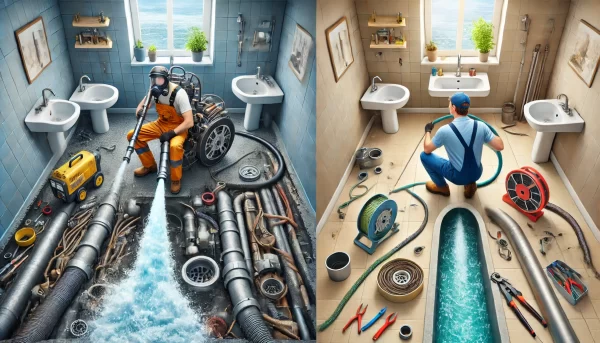
Blocked drains can quickly escalate from a minor inconvenience to a costly household issue if not addressed properly. Two of the most common methods for clearing these blockages are hydro jetting and snaking, each with distinct benefits, costs, and risks. Choosing the right method depends on various factors, including the type of blockage, pipe material, and cost considerations. In this article, we’ll provide a balanced discussion of these techniques, helping you understand which option might be best for your home.
Understanding Hydro Jetting and Snaking
Both hydro jetting and snaking are widely used in the plumbing industry to clear blocked drains, but they differ significantly in their approach. Hydro jetting uses a high-pressure water stream to break apart and wash away debris, grease, and mineral build-up along the pipe walls. On the other hand, snaking involves using a long, flexible auger inserted into the drain, which rotates to break up the blockage and create a pathway for water to flow again. If you’d like a general overview of how plumbers handle blocked drains, there are excellent resources that delve into various methods.
Costs of Hydro Jetting vs Snaking
Hydro Jetting
Hydro jetting is generally more expensive than snaking, with costs often ranging from $300 to $600, depending on the severity of the blockage and the accessibility of the pipes. The reason for the higher cost lies in the equipment and the expertise required. Hydro jetting involves sophisticated machinery and a skilled technician who understands the correct pressure levels for different types of pipes.
Though the upfront cost may be steeper, hydro jetting can offer better long-term value for persistent or tough blockages. The high-pressure water stream removes not only the obstruction but also any built-up grease, debris, or mineral deposits lining the pipe walls, potentially reducing the frequency of future blockages.
Snaking
Snaking is typically more affordable, with most services costing between $100 and $300. The technique is straightforward and requires less specialised equipment, making it a quicker and less expensive option. Snaking can often be completed in under an hour, with minimal disruption.
However, while snaking effectively clears smaller clogs, it doesn’t clean the pipe walls as thoroughly as hydro jetting. For this reason, snaking may be less effective for blockages caused by grease or mineral build-up that tend to recur, potentially leading to additional costs over time for repeated snaking services.
For a detailed cost comparison of hydro jetting vs snaking, it’s helpful to understand both methods’ effectiveness in different scenarios and their overall impact on maintenance costs.
Risks of Hydro Jetting vs Snaking
Hydro Jetting Risks
While hydro jetting is highly effective, it also carries certain risks, particularly for older or fragile plumbing systems. The intense water pressure—sometimes as high as 4000 psi—can cause weak or corroded pipes to crack or burst. For this reason, hydro jetting is often best suited to newer plumbing or commercial systems made of durable materials like PVC.
Another consideration is the skill level required to operate a hydro jetting machine safely. Incorrect pressure settings or poor technique can damage even relatively strong pipes. Hiring a licensed plumber with experience in hydro jetting is crucial to minimise these risks and ensure safe, effective results.
Snaking Risks
Snaking is generally considered a gentler method, but it’s not without potential downsides. The flexible metal auger used in snaking can scratch or damage certain types of pipe materials, especially if excessive force is applied. In severe cases, a powerful auger can puncture a fragile or corroded pipe.
Additionally, while snaking can clear a blockage, it often fails to address the underlying cause, such as grease or mineral build-up. Over time, the partial removal of the blockage can lead to repeated clogs and wear on the pipes, eventually necessitating more invasive repair methods or pipe replacement.
Effectiveness for Different Types of Blockages
Grease and Mineral Build-Up
For blockages caused by grease, mineral deposits, or other sticky build-ups along the pipe walls, hydro jetting is typically the superior option. The high-pressure water can thoroughly clean the pipe interior, removing not just the blockage but also any residue that might lead to future clogs. In contrast, snaking may only puncture the blockage, leaving grease or mineral build-up to accumulate again over time.
Tree Roots and Debris
Tree roots are a common cause of blocked drains, particularly in older properties where the pipes may have small cracks. Hydro jetting can cut through roots effectively; however, it may not remove them entirely. Snaking can be fitted with specialised attachments to cut through roots, making it potentially more effective in these cases. However, for severe root intrusion, a combination of both methods might be recommended, or the pipes may need replacement if damage is extensive.
Environmental Considerations
Hydro jetting is generally a more eco-friendly option since it relies solely on water to clear blockages. This method avoids the use of chemical drain cleaners, which can be harmful to both the plumbing system and the environment. On the other hand, snaking doesn’t typically involve chemicals either, but if the blockage is stubborn, some plumbers may use chemicals to soften it beforehand, potentially impacting the environment.
Choosing the Right Method for Your Pipes
The decision between hydro jetting and snaking often depends on factors such as the age of your pipes, the material, and the type of blockage. If you have PVC or relatively new pipes and are dealing with grease or mineral build-up, hydro jetting might be the better choice. For older systems or pipes with minor blockages, snaking can be an affordable and gentle option that gets the job done.
When to Call a Professional
Attempting to clear a blockage yourself can sometimes exacerbate the issue, especially with tougher blockages or older plumbing systems. A professional plumber can assess the condition of your pipes, determine the exact cause of the blockage, and recommend the most appropriate method. Additionally, licensed plumbers have the expertise and equipment to carry out hydro jetting and snaking safely, ensuring minimal risk to your plumbing.
Final Thoughts on Hydro Jetting vs Snaking
Both hydro jetting and snaking have their place in the plumbing industry. Hydro jetting offers a powerful solution for severe or recurring blockages, particularly those caused by grease or mineral build-up, while snaking provides an affordable, straightforward option for minor clogs and older pipes. Homeowners should weigh the costs and risks of each method and consider the specifics of their plumbing system.
By understanding the pros and cons of each method, you can make an informed decision that best suits your needs and budget. If you’d like a comprehensive guide on the subject, consider reading about hydro jetting vs snaking for further insights.